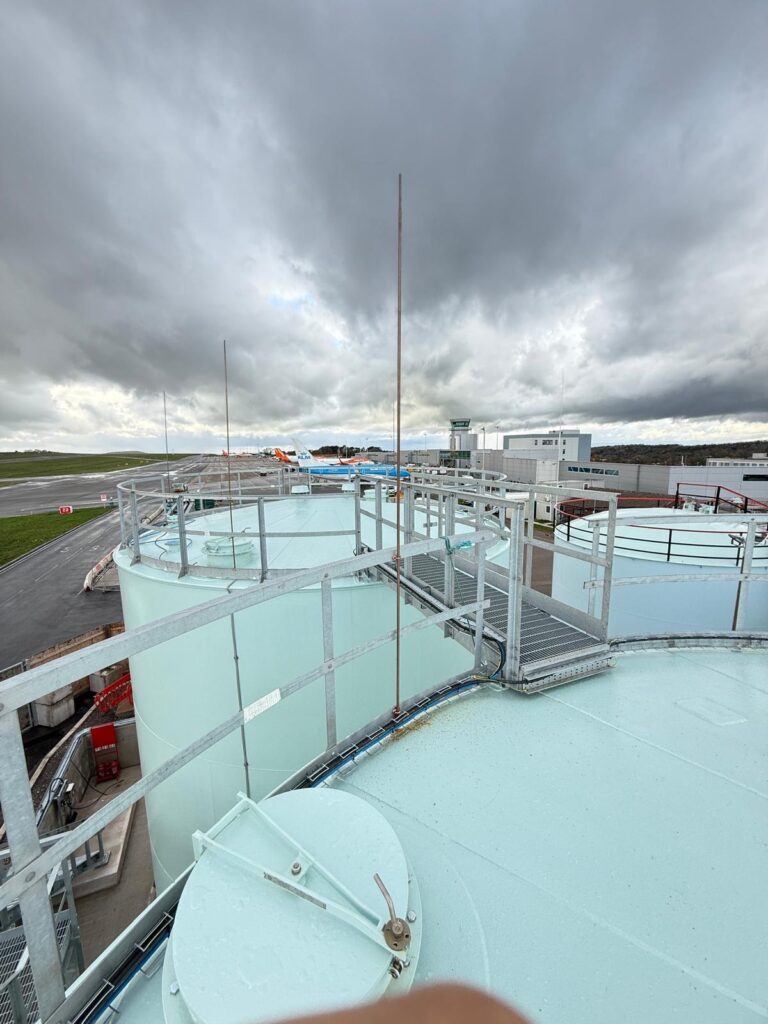
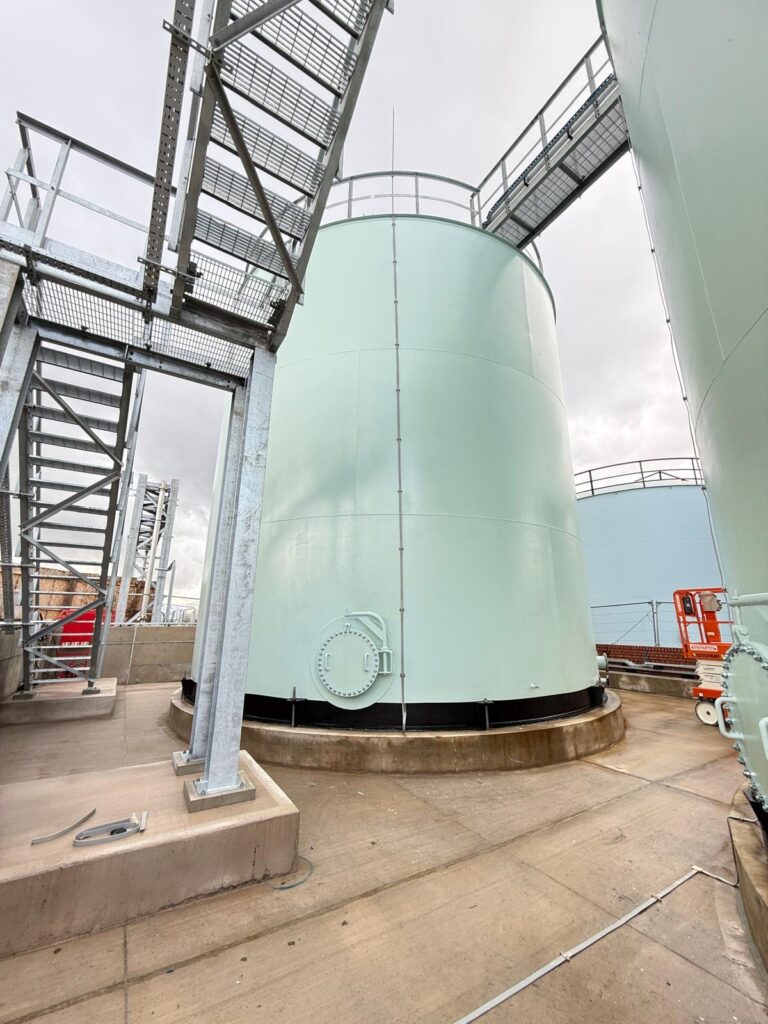
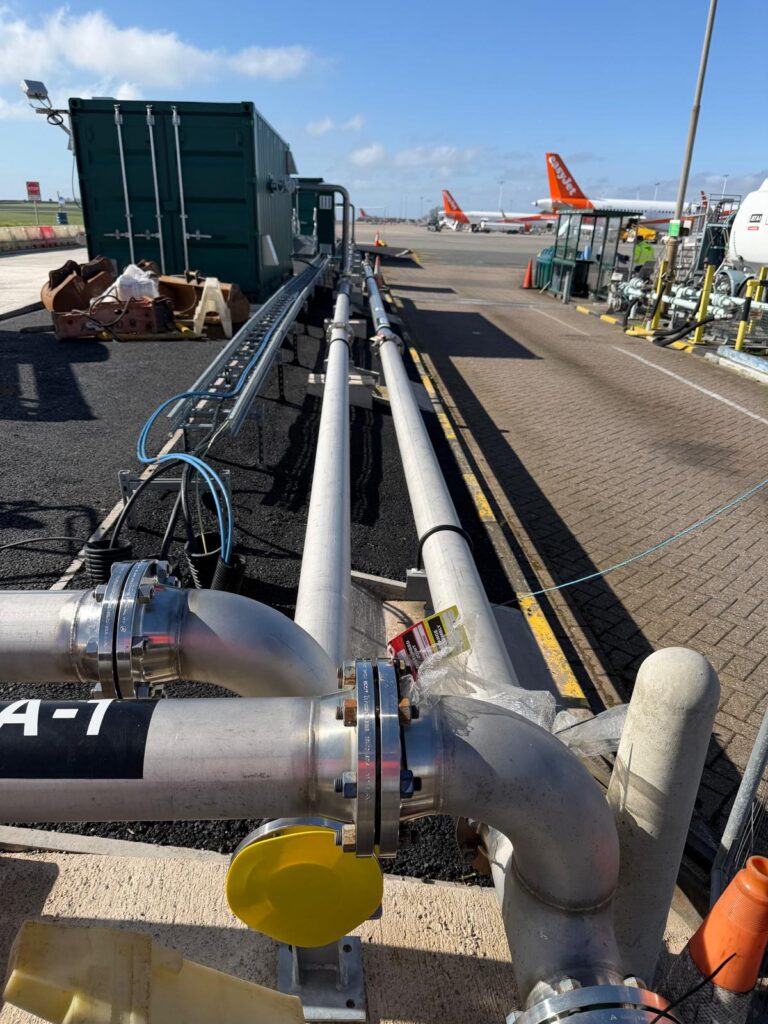
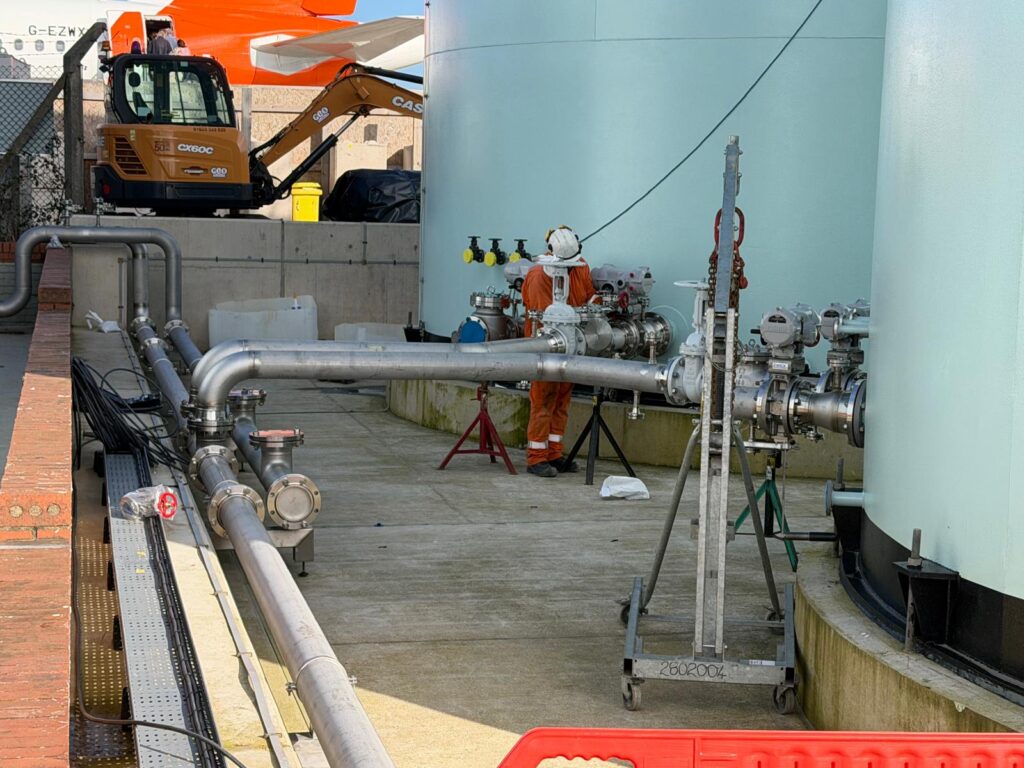
PLS was appointed to deliver a major fuel infrastructure upgrade at Bristol Airport, providing two new 400,000 litre fuel tanks and new tanker offloading facilities, fully integrated into the existing fuel system. The works were delivered in multiple phases within a live airport environment, requiring detailed planning, strict safety controls and close coordination with specialist contractors.
Phase 1 – Enabling Works and Fuel Line Diversion
The first stage of the project involved enabling works to facilitate the new tank installation. An existing 6 inch JET A1 fuel line ran approximately 1 metre above ground and supplied the tanker upload area. In order to construct the new tanks without interrupting operations, we designed and built a new pipe bridge and diverted the existing fuel line over it.
Once the diversion was complete and operational, resurfacing works were carried out beneath the original line location to create a new tanker exit route, improving traffic flow and future access within the fuel farm.
Phase 2 – Tank Bases, Bund Construction and Tank Installation
The second phase involved breaking out and excavating to 2 metres below ground level to construct a new reinforced concrete bund with radius bases for the two new tanks. The bund provides secondary containment in the event of a spill and is a critical compliance requirement within aviation fuel facilities.
Once the civil works were complete, Rhyal Engineering attended site to construct the tanks. A crane was used to assemble the tanks in situ. The tank base plates arrived in individual petal sections and were welded together on site. After the base plates were completed, the shell plates were lifted into position. Each tank consists of three tiers, with three individual shell plates per tier. These were lifted, positioned and tack welded before full welding took place.
Internal and external staging was installed after each tier to provide safe access for horizontal and vertical welds. Stand 1 at Bristol Airport was occupied as a laydown area to accommodate the crane, material storage and roof assembly works. The tank roofs were assembled at ground level from individual petal plates, welded together, and then craned into position. Once installed, the internal and external staging was removed progressively from the top down.
Following tank construction, Wardle Painters lined the tank internals and painted the externals. External works were completed using scissor lifts, while internal scaffolding was erected within each tank to allow full access for lining.
Phase 3 – New Tanker Offloading Facilities
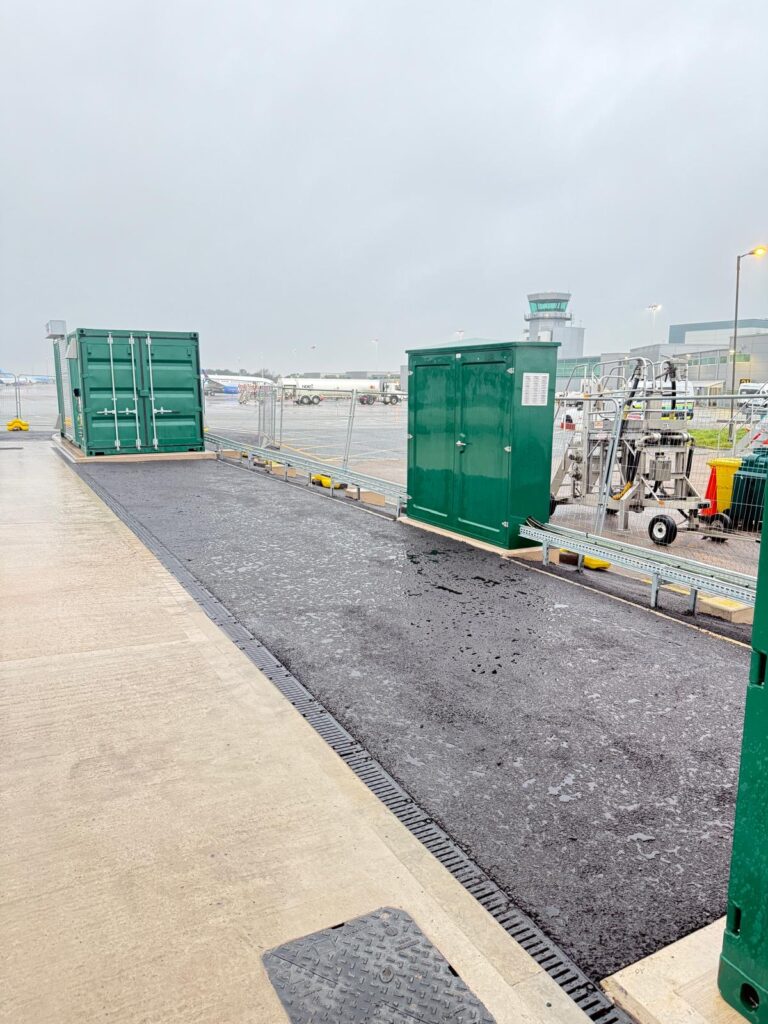
The third phase delivered two new offload modules positioned west of the new pipe bridge, forming the new tanker offloading area. Fuel is discharged from road tankers into these modules and pumped into both the new and existing tanks.
The offload modules were manufactured off site by AKA and supplied as fully fitted 20 foot container units complete with pumps and pipework. We constructed reinforced concrete bases to house the modules, which were then lifted into place using a HIAB.
A new concrete access road was built in front of the modules to facilitate tanker operations. The road was designed as a bunded area in the event of spillage. A 50mm upstand was formed around the perimeter, directing any spilled fuel towards an ACO drain. The drainage system discharges into the existing interceptor, ensuring environmental compliance.
Phase 4 – M&E Installation and Integration
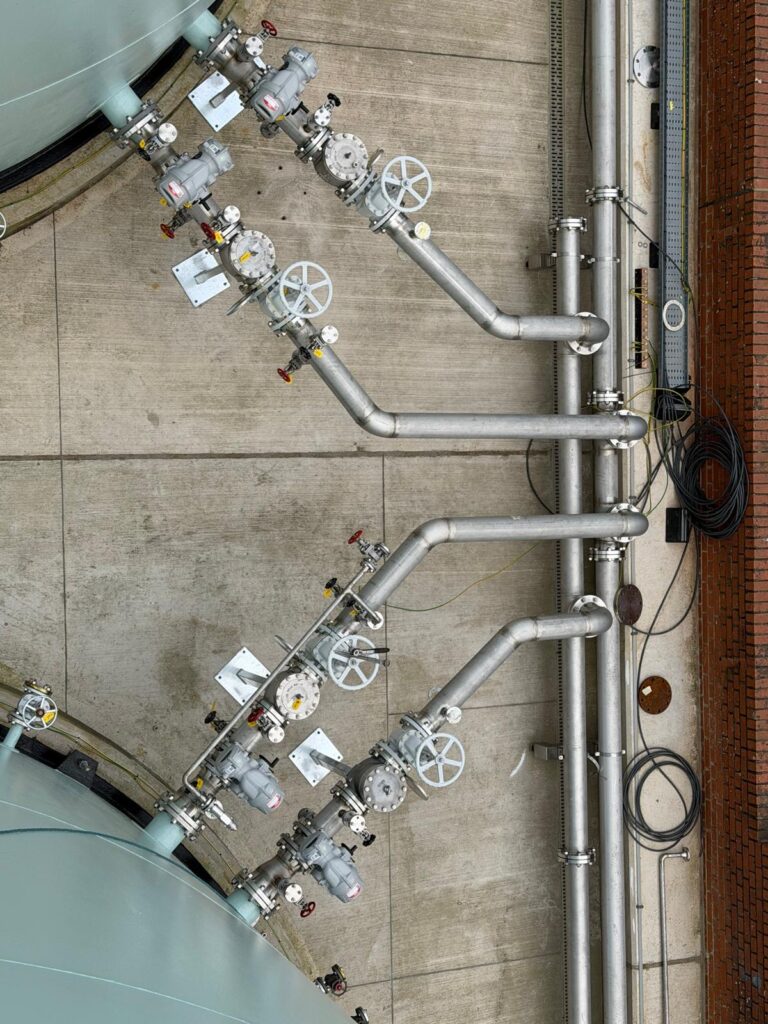
The final phase of works involves the completion of mechanical and electrical installations. The electrical installation is now approximately 95 percent complete, with final commissioning pending. Offload and upload pipework is currently being installed to integrate the new tanks and modules into the wider fuel network.
Additional Works – Tank D Bund Relining
As part of the wider project, PLS was also instructed to carry out relining works to the existing Tank D bund. The original liner had been condemned due to multiple penetrations, creating compliance concerns. To restore integrity, we are installing a concrete canvas system over the existing liner, providing a durable and compliant containment solution.
Project Outcome
The Bristol Airport fuel infrastructure upgrade demonstrates PLS’s capability to deliver complex, multi phase projects in highly regulated live environments. From fuel line diversions and deep excavations to in situ tank construction and environmental containment systems, the works required precision, coordination and strict adherence to safety and compliance standards.
Once fully commissioned, the new infrastructure will significantly increase fuel storage capacity, improve tanker operations and provide a modern, compliant facility to support the airport’s continued growth.